





Battery Compatibility with Pure Sine Wave Car Inverters
- Understanding the fundamentals: why batteries matter for inverters
- How a car inverter pure sine wave interacts with the battery
- Key electrical parameters to match
- Standards and waveform quality
- Battery chemistries: pros, cons and compatibility
- Lead‑acid: flooded, AGM and gel
- Lithium‑ion: LiFePO4 and other Li chemistries
- Battery chemistry comparison (practical view)
- Practical matching: voltage, capacity sizing and surge handling
- Voltage matching and bank configuration
- Runtime and capacity calculation (my formula and example)
- Surge current, inverter continuous vs peak ratings
- Charging, BMS interaction and safety considerations
- Charger/inverter charging profiles and battery chemistry
- BMS behavior and inverter protections
- Installation, cabling and thermal management
- Real‑world troubleshooting and tips
- Common problems I encounter and how to fix them
- Maintenance and lifecycle optimization
- Data and verification
- Choosing components: a compact decision checklist
- Checklist I use before specifying a system
- When to prefer LiFePO4 over lead‑acid
- When to stick with lead‑acid
- About Guangzhou Congsin Electronic Technology Co., Ltd. and how we help
- FAQ — Battery Compatibility with Pure Sine Wave Car Inverters
- 1. Can I use a standard car battery (starter battery) with a pure sine wave inverter?
- 2. Do I need a special charger for LiFePO4 when used with a pure sine wave inverter?
- 3. How do I size a battery to run a 1000 W load for 2 hours?
- 4. Will a pure sine wave inverter damage a battery that has a BMS?
- 5. What are the signs my battery is unsuitable for my inverter?
- 6. Is a pure sine wave inverter necessary for all car applications?
As someone who has designed and tested car power systems for decades, I know that selecting the right battery for a car inverter pure sine wave system is not just about capacity — it's about chemistry, voltage, discharge characteristics, thermal behavior, BMS compatibility and how the inverter’s electrical protections and wave quality interact with sensitive loads. In this article I walk you through the practical rules I use in the field to ensure reliable, efficient and safe mobile AC power systems.
Understanding the fundamentals: why batteries matter for inverters
How a car inverter pure sine wave interacts with the battery
A pure sine wave inverter converts DC battery voltage into a clean AC waveform suitable for sensitive electronics, motors and medical devices. The inverter pulls current from the battery depending on the AC load and its conversion efficiency. That means battery voltage sag, internal resistance (ESR), and available instantaneous current directly affect inverter performance, surge capability and thermal stress.
Key electrical parameters to match
When I evaluate battery options for a car inverter pure sine wave system I focus on: nominal DC voltage (12V/24V/48V), continuous and peak current capability, usable capacity (Ah at a given DoD), internal resistance, and charging profile/bms requirements. Incorrect matching often leads to nuisance low-voltage disconnects, reduced run time, or inverter shutdown under surge loads.
Standards and waveform quality
Pure sine wave inverters typically have lower total harmonic distortion (THD) than modified sine wave units, reducing heating and stress on motors and sensitive electronics. For background, see the inverter overview on Wikipedia and notes on waveform types at Modified sine wave. THD is a useful metric; learn more at THD (Wikipedia).
Battery chemistries: pros, cons and compatibility
Lead‑acid: flooded, AGM and gel
Lead‑acid variants are common in vehicles and are generally compatible with car inverter pure sine wave systems if sized correctly. Flooded (wet) batteries tolerate high surge currents but need ventilation and maintenance. AGM and gel offer lower maintenance and better vibration resistance; however, charging voltages and temperature compensation differ. Many inverters include low-voltage disconnect (LVD) to prevent deep discharge which is crucial for lead‑acid longevity.
Lithium‑ion: LiFePO4 and other Li chemistries
LiFePO4 (LFP) has become a preferred choice for mobile pure sine wave inverter systems due to high cycle life, flat voltage curve, lower weight and high usable DoD (typically 80–90%). Other Li‑ion types (NMC, etc.) provide higher energy density but require careful BMS management. When using Li batteries you must ensure the inverter and charging system respect charge voltages and the BMS disconnect behavior.
Battery chemistry comparison (practical view)
| Chemistry | Typical usable DoD | Cycle life | Surge capability | Notes for car inverter pure sine wave |
|---|---|---|---|---|
| Flooded Lead‑acid | 40–50% | 300–800 | Good | Cheap, heavy, needs maintenance/ventilation; use LVD to protect bank. |
| AGM / Gel | 50–60% | 500–1000 | Good | Maintenance‑free, vibration resistant; charging voltages differ from flooded. |
| LiFePO4 (LFP) | 80–90% | 2000–5000+ | Excellent (low ESR) | Lightweight, long life, needs compatible charger/BMS and proper high‑current cabling. |
| Other Li‑ion (NMC) | 70–85% | 500–2000 | Very good | Higher energy density; confirm BMS specs and thermal behavior. |
Sources for battery chemistry characteristics include technical summaries and reviews such as Battery University (batteryuniversity.com).
Practical matching: voltage, capacity sizing and surge handling
Voltage matching and bank configuration
Car inverter pure sine wave models are designed for specific DC input voltages (12V, 24V, 48V). You must match the inverter nominal DC voltage to the battery bank. For higher power requirements, parallel or series configurations are used — but take care:
- Series connections increase voltage (e.g., four 12V cells → 48V) — used to feed 48V inverters that have lower DC currents for same AC power, reducing losses.
- Parallel connections increase capacity (Ah) at the same voltage — use identical batteries (age, capacity, internal resistance) to avoid imbalance.
Runtime and capacity calculation (my formula and example)
I use the following practical formula to estimate battery Ah needed for a target runtime:
Required Ah = (AC load watts × runtime hours) / (DC voltage × inverter efficiency × usable DoD)
Example: run a 500 W AC load for 3 hours from a 12V battery bank, inverter efficiency 90% (0.9), usable DoD 50% (0.5):
Ah = (500 × 3) / (12 × 0.9 × 0.5) = 1500 / 5.4 ≈ 278 Ah
So you’d need a 12V battery bank of ~300 Ah nominal to provide margin. For LiFePO4 with 80% DoD and 95% efficiency, required Ah drops significantly.
Surge current, inverter continuous vs peak ratings
Many car appliances (compressor refrigerators, pumps, power tools) have high startup surges. Check inverter peak (surge) rating and ensure battery can deliver that current without excessive voltage sag. Low ESR LiFePO4 banks excel at surge delivery; lead‑acid banks may require larger Ah or parallel units to meet transient demands. Proper cabling and terminal connections are essential to minimize voltage drops during surge events.
Charging, BMS interaction and safety considerations
Charger/inverter charging profiles and battery chemistry
When using a car inverter pure sine wave with built‑in or separate battery charger, ensure charger setpoints match battery chemistry. Lead‑acid needs specific bulk/absorb/float voltages and temperature compensation. LiFePO4 requires higher bulk voltage and usually does not need float charging; many Li batteries incorporate a BMS that enforces charge limits. Mismatched settings can shorten battery life or trigger BMS disconnects.
BMS behavior and inverter protections
A battery management system (BMS) may disconnect the pack during undervoltage, overcurrent or overtemperature conditions. In my installations I always verify that the inverter’s LVD thresholds and the BMS undervoltage trip point are coordinated so the BMS disconnects before irreversible cell damage but after the inverter’s LVD avoids repeated false trips. Documented BMS/inverter interactions are an often overlooked source of downtime.
Installation, cabling and thermal management
Good practice I enforce on all vehicle installs:
- Short, thick DC cables sized for peak currents (use voltage drop calculators and a safety margin).
- Proper fusing close to the battery to protect wiring.
- Ventilation or thermal management: lead‑acid emits hydrogen during charge; Li batteries need temperature protection and may require heating in very cold climates to accept charge.
Real‑world troubleshooting and tips
Common problems I encounter and how to fix them
1) Inverter shuts down during high surge — usually undersized battery or thin cables. Solution: measure battery voltage at inverter during surge, upgrade cables or add battery capacity.
2) Repeated low‑voltage disconnects — battery capacity or state of health insufficient, or inverter LVD set too conservatively. Solution: re‑calculate Ah, check battery age, adjust inverter LVD if allowed by battery maker.
3) Charger not fully charging LiFePO4 from alternator or solar — alternator regulator may not reach required bulk voltage; consider DC‑DC charger or a solar charge controller with appropriate voltage setpoints.
Maintenance and lifecycle optimization
For lead‑acid I recommend keeping float charge and temperature compensation, and avoiding deep discharges. For LiFePO4 avoid prolonged full‑charge float and keep the pack within recommended temperature ranges. Regular capacity testing (load test or C/20 test) will reveal aging earlier than voltage measurements alone.
Data and verification
When possible I log battery voltage, current and inverter output during commissioning. Logged traces help correlate events (e.g., surge, BMS trip, charger behavior). For standards and safety references see the ISO9001 quality system information at ISO and inverter design safety standards such as IEC 62109 (power converter safety) for product compliance validation.
Choosing components: a compact decision checklist
Checklist I use before specifying a system
- Define continuous and peak AC loads (W) and desired runtime.
- Pick inverter nominal DC voltage that minimizes DC currents (prefer 24V/48V for high power in vehicles when feasible).
- Select battery chemistry considering weight, cycle life, space and surge needs.
- Verify charger/alternator and solar charge controller support battery charge profile and BMS requirements.
- Design cabling and protection with a safety margin for surge current and voltage drop.
When to prefer LiFePO4 over lead‑acid
I choose LiFePO4 when weight matters, cycle life is important, or when frequent deep discharge and fast recharge cycles are expected (e.g., mobile workstations, RVs, patrol vehicles). For purely budget constrained, low‑cycle use, AGM or flooded may still be acceptable.
When to stick with lead‑acid
Lead‑acid remains attractive for low‑cost, low‑duty installations or where simple charging (alternator only) and ruggedness to abuse are priorities — but be conservative on usable DoD and plan replacements sooner.
About Guangzhou Congsin Electronic Technology Co., Ltd. and how we help
Having evaluated many suppliers, I often rely on partners who combine manufacturing scale, product compliance and system knowledge. Guangzhou Congsin Electronic Technology Co., Ltd., founded in early 1998, is a professional power inverter manufacturer with over 27 years of focused experience. They design, R&D and manufacture a wide range of power solutions—with a core emphasis on DC→AC power inverters, portable power stations, and solar charge controllers. Their catalog includes 100+ models tailored for vehicles, solar systems, RVs and trucks, off‑grid homes, outdoor offices, patrol and field construction work.
Congsin operates fully automated production lines, advanced instrumentation and multifunctional testing equipment to ensure product reliability and intelligent functionality. Their ISO9001 quality system and international approvals (CE, EMC, LVD, ETL, FCC, RoHS, E‑MARK) provide reassurance for OEMs and end users. Several independently developed patents further demonstrate commitment to innovation.
Products and services relevant to car inverter pure sine wave systems include Solar Charge Controllers, modified sine wave inverter options, pure sine wave inverter series and portable power stations. Congsin supports OEM/ODM, private labeling, distribution and bespoke customization, and they supply global markets across Europe, the Americas, the Middle East, Africa and Southeast Asia. For more information visit www.csinverter.com or contact info@csinverter.com.
FAQ — Battery Compatibility with Pure Sine Wave Car Inverters
1. Can I use a standard car battery (starter battery) with a pure sine wave inverter?
Starter batteries are not optimized for deep cycling. They can support occasional loads but will have very limited runtime and short cycle life if used as a house battery. For inverter applications choose deep‑cycle AGM, gel, or better — LiFePO4 if possible.
2. Do I need a special charger for LiFePO4 when used with a pure sine wave inverter?
Yes. LiFePO4 requires specific bulk/absorption voltages and should be charged by a charger or solar controller that supports LiFePO4 profiles. Alternator charging often needs a DC‑DC charger to reach proper voltages under varying alternator conditions.
3. How do I size a battery to run a 1000 W load for 2 hours?
Using the sizing formula: Ah = (1000 W × 2 h) / (DC voltage × inverter efficiency × DoD). For 12V, 0.9 efficiency, 50% DoD: Ah ≈ (2000)/(12 × 0.9 × 0.5) ≈ 370 Ah. Choosing a higher voltage bank (24V/48V) will reduce DC current and cabling requirements.
4. Will a pure sine wave inverter damage a battery that has a BMS?
No — the inverter itself won’t damage a battery with a proper BMS, but mismatches in charger setpoints or weak cabling can trigger the BMS. Ensure charger/inverter settings and BMS trip thresholds are coordinated.
5. What are the signs my battery is unsuitable for my inverter?
Common signs: significant voltage sag on startup, inverter tripping on overload despite rated capacity, short runtime vs calculation, or frequent LVD events. Diagnose by measuring battery voltage and current during load events and checking internal resistance/age.
6. Is a pure sine wave inverter necessary for all car applications?
Not always. Pure sine wave is recommended for sensitive electronics, motors and variable speed devices. For resistive loads (some heaters) modified sine may work, but I recommend pure sine wave for long‑term reliability and to avoid compatibility issues.
If you have a specific vehicle, load profile or existing battery bank and want me to evaluate compatibility or propose a system, I can provide a tailored recommendation. For product options, OEM/ODM inquiries or technical datasheets, contact Guangzhou Congsin: www.csinverter.com or email info@csinverter.com. Our mission is to deliver reliable, efficient and affordable energy solutions that enable energy independence.
How to Choose a Good Pure Sine Wave Inverter for Home Use

The 2026 Complete Guide to Bidirectional Inverters: Beyond the Basics of Energy Storage
Sizing off-grid inverters: calculate inverter and battery needs
Safety and Certification Standards for Car Inverters
Pure Sine Wave Inverters
What is the reason for the inverter automatically shutting down during operation?
It is likely that the protection mechanism is triggered: 1. Load overload (total power of connected devices exceeds 1000W); 2. Abnormal input voltage (battery voltage <10.8V or >14.5V); 3. Device overtemperature (excessively high ambient temperature or cooling fan failure). It is recommended to disconnect some loads, check the battery voltage or clean the heat dissipation port before trying again.
What capacity battery is needed to drive a 1000W electric kettle?
It is recommended to match with a 12V 100Ah or larger capacity battery. When a 1000W electric kettle is working, the power consumption per hour is about 83Ah (1000W÷12V≈83A), and a 100Ah battery can support continuous work for about 1 hour (actual battery life is affected by battery aging).
Modified Sine Wave Inverters
Can it be connected to a battery long-term?
Yes, ensure good ventilation to avoid overheating.
How to connect to the battery?
Use the included battery clips, connect the red clip to the positive pole of the battery and the black clip to the negative pole. Ensure good contact and no short-circuit risk when connecting.
What is the function of the independent control switch?
The independent control switches for DC and AC can respectively control the on and off of DC and AC circuits, facilitating the separate management of power supply for different types of devices and improving power usage safety and flexibility.
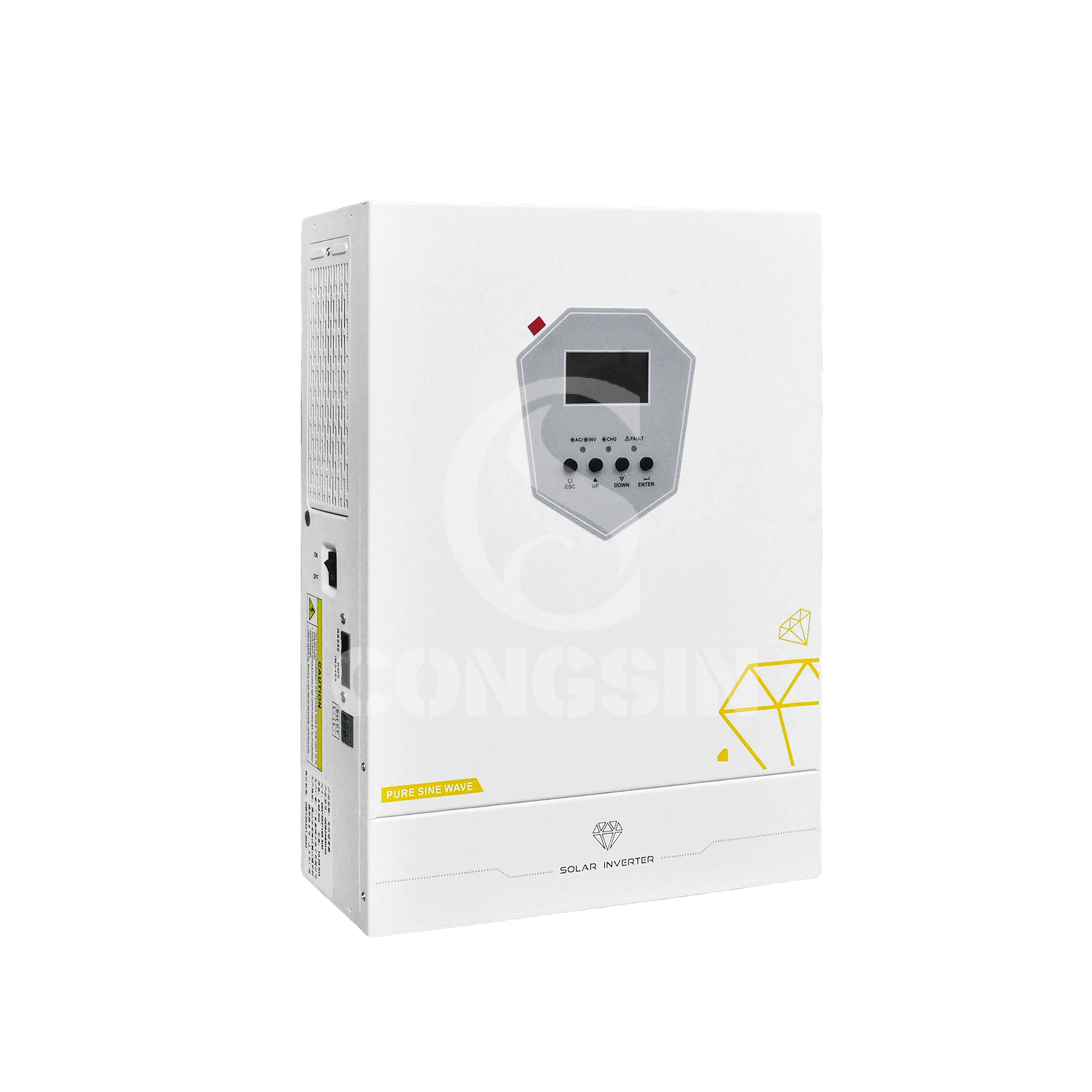
Factory Direct Sales 6000W Hybrid Solar Power Inverter with Controller and LCD Display
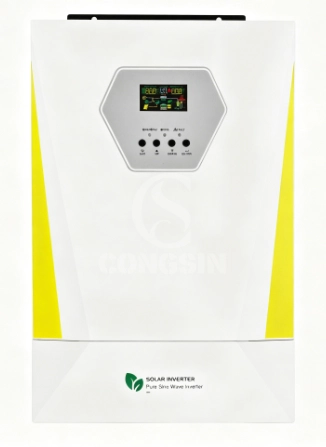
Congsin 4000W and 6000W Hybrid Inverter with Controller with LCD Display and CE Certification Solar
Power your solar system efficiently with the Congsin 4000W and 6000W Hybrid Inverter. Featuring an integrated MPPT Controller, this CE Certified inverter ensures optimal energy conversion. Monitor performance effortlessly via the intuitive LCD Display. Reliable, powerful, and ready for your sustainable energy needs.
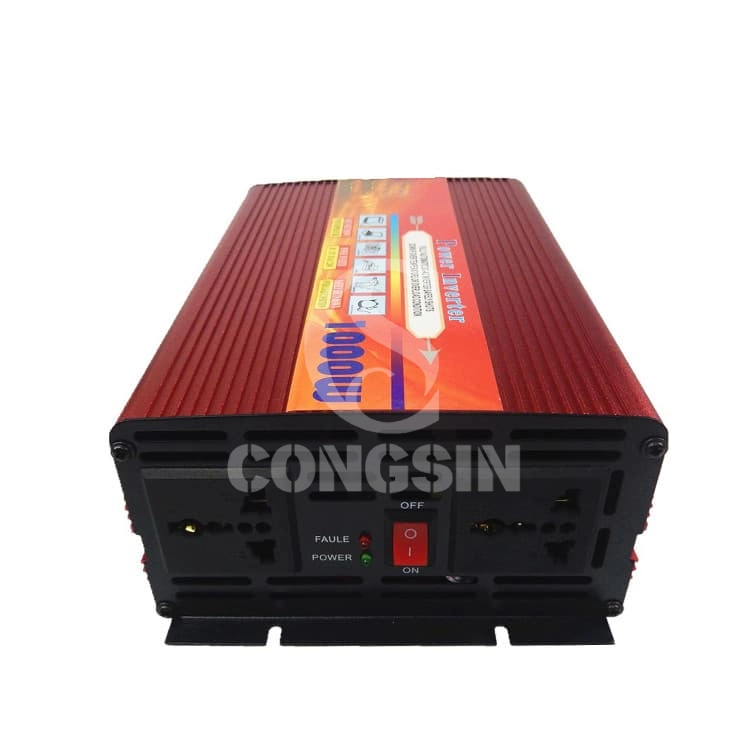
Congsin Manufacturer Wholesales Big Capability Modified Sine Wave Inverter with Red case and Double fan
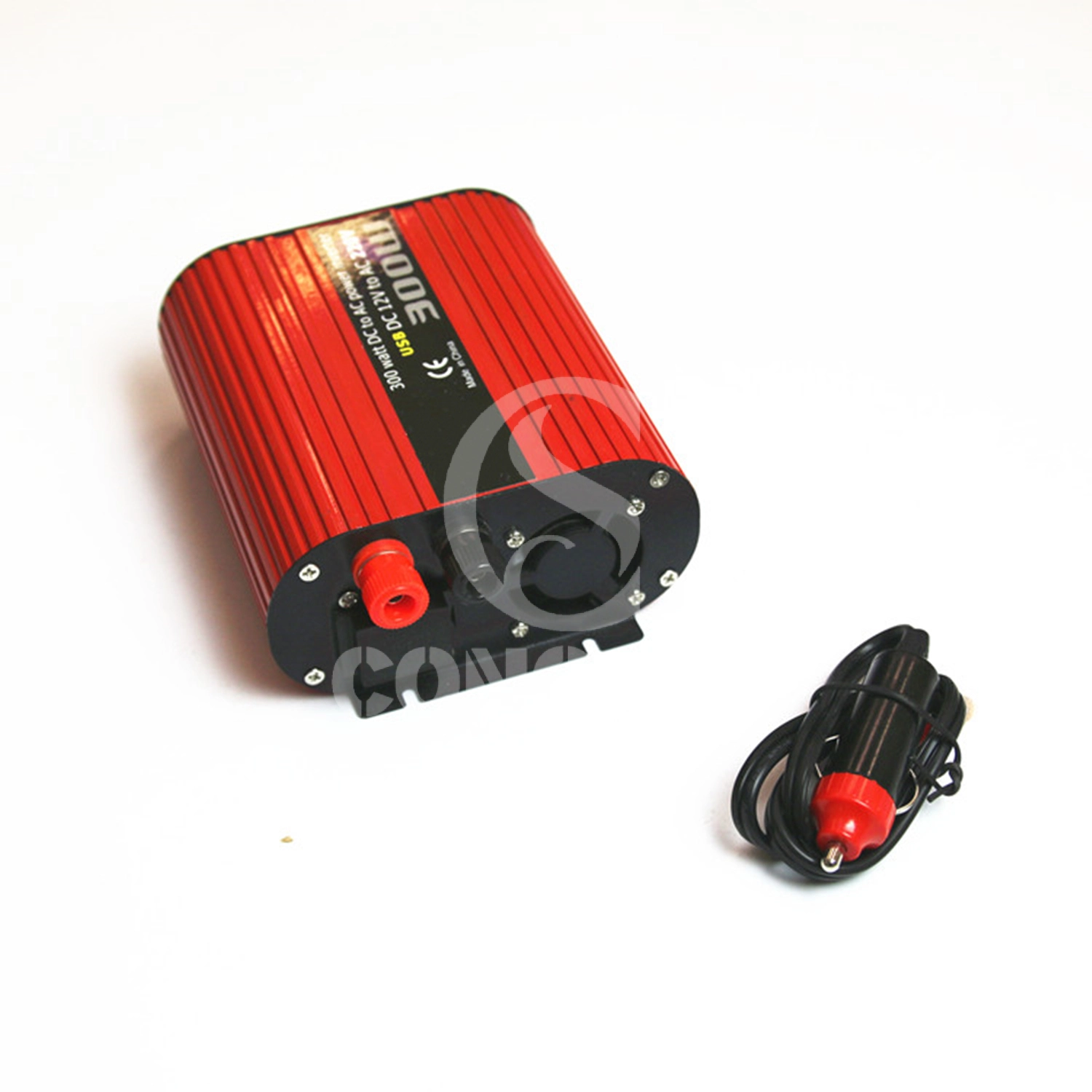
Factory Direct Sales Portable 150W Modified Sine Wave Inverter DC12V to AC220V Off-grid Sine Wave Inverter with Two USB and Universal Socket
Congsin's Portable 150W Modified Sine Wave Inverter powers your journey! This versatile Car Power Inverter with USB acts as a reliable 12V to 220V converter, ensuring an essential off-grid power supply. With dual USB ports and a universal socket, enjoy convenient power on the go.

CONGSIN is a trusted OEM factory for power inverters, solar charge controllers, and DC converters. Reliable solutions for global B2B buyers.
 High Quality
 7/24 Service
 Guaranteed Warranty
© 2025 Congsin. All Rights Reserved.
 WeChat
 Scan QR Code
sin cong
teaimei10
Whatsapp: +8618028086791
Scan QR Code